Why High-Cycle Springs Are Worth the Upgrade
Most garage doors come stock with springs that are rated for somewhere around 10,000 cycles. That sounds like a lot - until you consider that the average household opens and closes their door 4 to 6 times a day. Do the math and those standard springs wear out faster than most people expect.
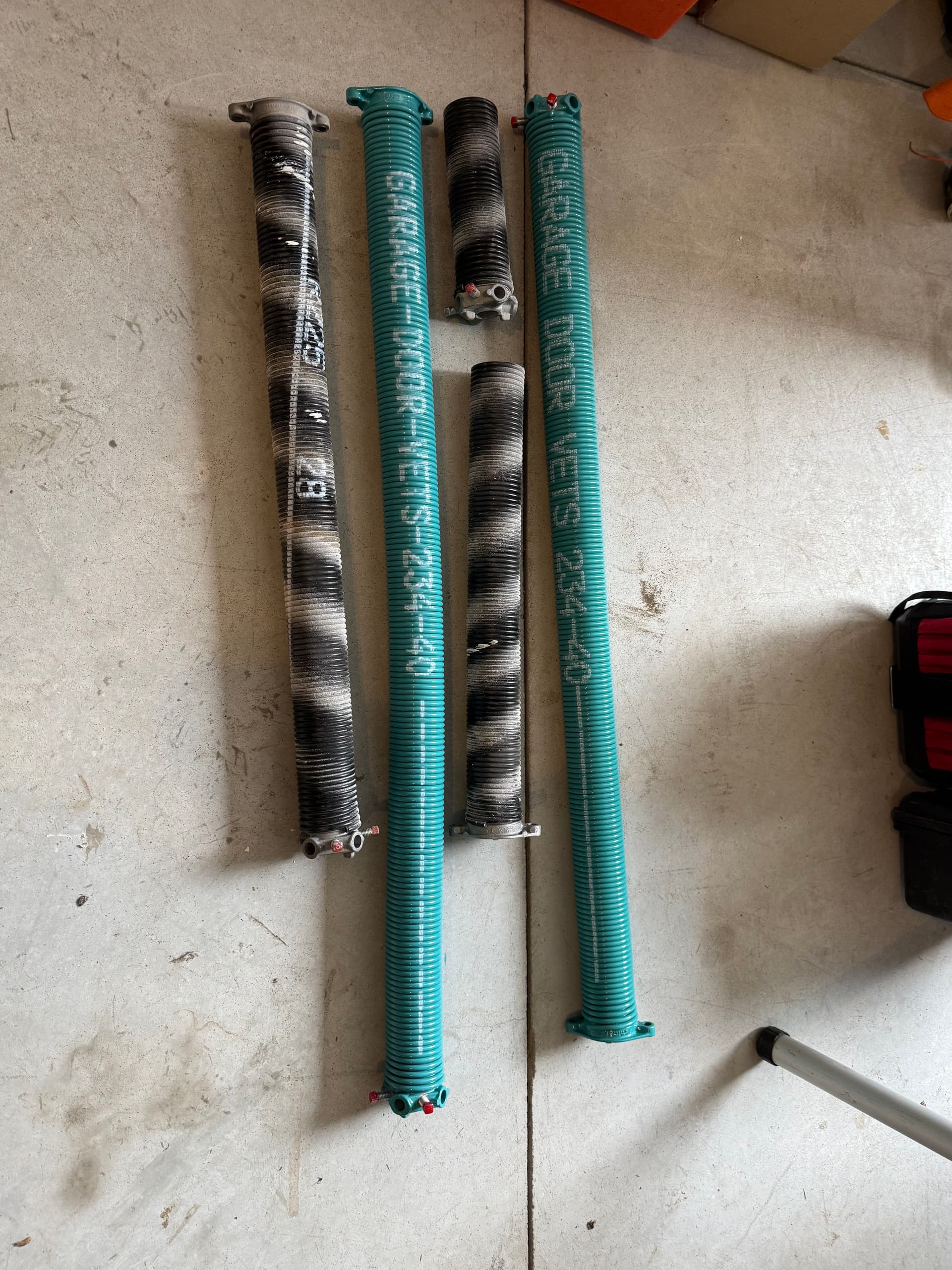
The worn-out springs you see next to the new teal ones tell the whole story. The old ones show the classic signs - metal fatigue, surface corrosion, and that dull grey color that comes from years of stress and moisture exposure. They still technically worked, but they were overdue.
The new springs we install are professional-grade high-cycle units, rated to last significantly longer than what most doors come with from the factory. They're also oil-tempered and treated to resist rust and corrosion - which matters a lot if your garage gets humidity or temperature swings throughout the year. The difference in how your door moves and sounds after a swap like this is noticeable right away.
Beyond the longevity, there's a safety angle here too. A spring under tension that fails unexpectedly can cause real damage - to your door, your opener, or anything nearby. Upgrading before that happens is a lot easier than dealing with the aftermath.
If your door has been grinding, running slow, or making noise it didn't used to make, the springs are usually the first place we look. It's a straightforward upgrade with a pretty clear payoff.